If you watch Tai Chi or Qigong carefully, you’ll notice something subtle.
Very little is truly straight.
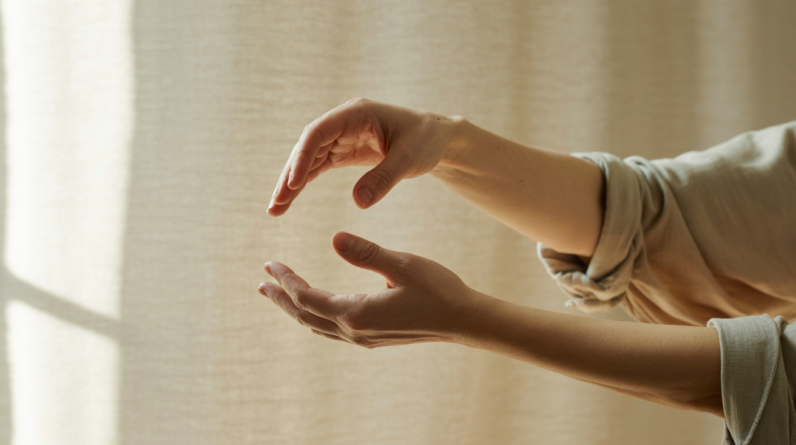
Movements that appear linear — up and down, forward and back — often contain a circular quality underneath.
That’s not accidental.
Circular motion is foundational.
Nature Rarely Moves in Straight Lines
Planets orbit.
Water swirls.
Breath expands and returns.
Seasons cycle.
Even within the body:
Blood circulates.
Joints rotate.
Energy flows in arcs and spirals.
Straight lines are efficient.
Circles are sustainable.
Why Circles Feel Smoother
When we move in straight lines with tension, we often:
-
Lock joints
-
Overuse muscles
-
Create abrupt stops
Circular motion distributes effort.
There’s no harsh beginning.
No jarring end.
The energy continues.
This is one reason circular Tai Chi movement feels softer — yet surprisingly strong.
(I recently dropped a question about your favorite application of circles in Tai Chi or Qigong here. )
The Lower Dantian and 360-Degree Expansion
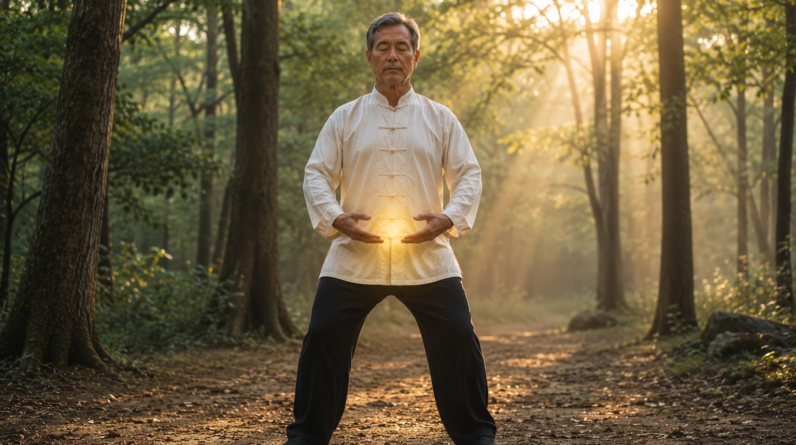
In traditional practice, we often bring awareness to the Lower Dantian — the energetic center behind the navel.
On inhalation, imagine energy expanding outward in all directions.
Not just forward.
Not just upward.
But 360 degrees.
Like a sphere gently inflating.
On exhalation, that expansion softly returns inward.
Not collapsing.
Simply gathering.
This spherical awareness changes movement.
It makes it three-dimensional.
Alive.
Upward and Downward Is Not Just Vertical
Take the movement sometimes called “Upward and Downward.”
At first glance, it appears linear.
Hands rise.
Hands lower.
But when practiced with circular awareness:
-
The rise includes an arc.
-
The lowering gathers inward.
-
The torso subtly participates.
It becomes less mechanical.
More connected.
More fluid.
The circle is always present — even when hidden.
Circles in the Warmup
Even simple warmups contain circular intelligence:
Shoulder rolls.
Ankle rotations.
Gentle waist turns.
These movements prepare joints in a natural way.
They lubricate.
They integrate.
They connect breath with motion.
The circle reduces strain.
And strain is what many adults are trying to avoid.
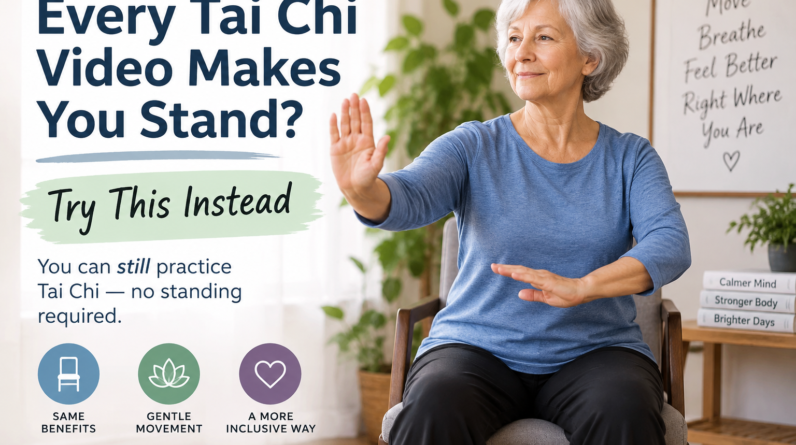
You Can Practice This While Seated
Circular motion does not require large space or dramatic range.
Even in a chair, you can:
-
Expand the chest in a gentle arc
-
Rotate wrists slowly
-
Visualize spherical breath around the Lower Dantian
The key is awareness.
When movement becomes circular, it becomes continuous.
And continuity builds energy rather than depleting it.
If you’d like guided, fully seated sessions that explore circular movement safely and progressively, you can learn more at SeatedChiFlow.com.
Gentle motion.
Spherical awareness.
Steady energy.