Modern life rewards speed. We move quickly, think quickly, and often exercise quickly. High-intensity workouts promise faster results. Productivity culture celebrates urgency.
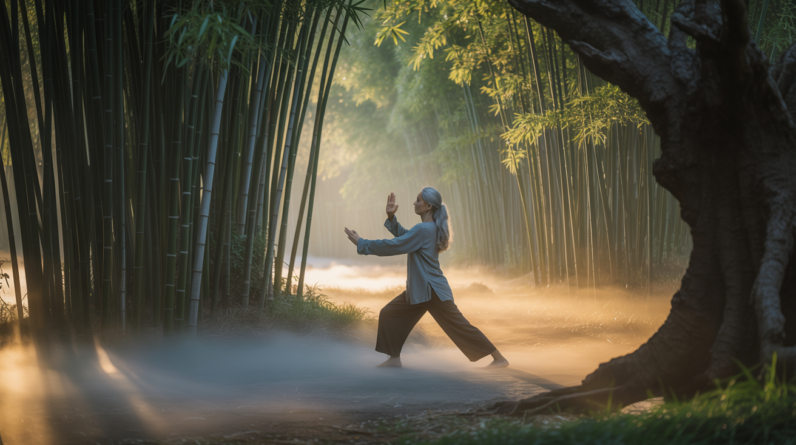
Yet in parks across the world—from Beijing to San Francisco—you’ll see people practicing Tai Chi in slow, deliberate motion.
At first glance it looks almost effortless.
But that apparent slowness hides something powerful.
Slow movement in Tai Chi is not accidental. It is the central training method behind the art’s remarkable benefits for balance, nervous system regulation, mobility, mindfulness, and longevity.
And once you understand why Tai Chi is practiced slowly, you begin to see that slowness is not a weakness.
It’s a form of intelligence.
What Happens When You Slow Your Body Down
Most exercise styles emphasize speed and exertion. Tai Chi does the opposite.
Instead of explosive movement, it trains continuous, controlled motion.
Instead of tension, it emphasizes relaxation and alignment.
Instead of forcing the body, it teaches the body to coordinate efficiently.
From a physiological perspective, slow movement does several important things at once:
-
Improves neuromuscular coordination
-
Enhances joint stability and balance
-
Activates the parasympathetic nervous system
-
Increases body awareness and proprioception
-
Allows breath and movement to synchronize naturally
In other words, moving slowly gives your brain time to fully process movement.
Fast movement can hide inefficiencies.
Slow movement exposes them—and teaches the body how to correct them.
That is why slow practice has been central to Tai Chi training for centuries.
The Physical Benefits of Slow Movement in Tai Chi
Slow Tai Chi movements look gentle, but they create profound physical adaptations.
Balance and Fall Prevention
One of the most studied benefits of Tai Chi is improved balance.
Slow shifting of weight from one leg to another trains the body’s postural stabilizers—the small muscles that maintain equilibrium.
Research consistently shows Tai Chi reduces fall risk, particularly in older adults.
Why?
Because slow movement strengthens the exact systems responsible for balance:
-
ankle stabilizers
-
hip stabilizers
-
core muscles
-
sensory feedback from the feet
When movement slows down, the body learns how to maintain stability at every moment.
Strength Through Controlled Motion
Tai Chi builds strength differently from conventional exercise.
Instead of lifting heavy weights, practitioners hold positions while moving slowly.
This produces isometric and eccentric muscle engagement, which develops:
-
joint-supporting muscle strength
-
endurance in stabilizing muscles
-
improved posture
The result is functional strength—strength that supports everyday movement.
Mobility and Joint Longevity
Many people discover Tai Chi because they want exercise that is gentle on the joints.
Slow movement allows joints to travel through their natural range of motion without impact.
Over time, this improves:
-
joint lubrication
-
connective tissue elasticity
-
mobility in the hips, knees, and shoulders
For people with arthritis or stiffness, this slow, controlled movement can feel restorative.
The Nervous System Benefits of Slow Movement
Slow Tai Chi is not only a physical exercise.
It is also a powerful form of nervous system training.
When movement slows down and breathing becomes natural, the body shifts toward the rest-and-restore mode of the nervous system.
This involves activation of the Parasympathetic Nervous System.
This shift can lead to:
-
reduced stress hormones
-
improved heart rate variability
-
deeper breathing patterns
-
mental calmness
In today’s fast-paced environment, many people live in a near-constant state of sympathetic activation—fight-or-flight.
Slow Tai Chi gently guides the body back toward equilibrium.
This is why many practitioners describe Tai Chi as “moving meditation.”
The Mental and Emotional Benefits of Moving Slowly
Something surprising happens when you move slowly.
Your attention sharpens.
Every movement becomes noticeable.
Small details—weight shifts, posture adjustments, breathing patterns—come into awareness.
This increased awareness supports several psychological benefits:
Improved Focus
Slow movement forces the mind to stay present.
If attention wanders, the movement immediately feels unstable.
Practitioners learn to sustain attention across extended sequences of motion.
Emotional Regulation
Slow breathing and controlled movement create a calming effect on the nervous system.
Over time, many people notice improvements in:
-
emotional resilience
-
stress recovery
-
mental clarity
The practice becomes a way of resetting the mind and body.
Mindfulness Through Movement
Traditional meditation often involves stillness.
Tai Chi offers an alternative.
It allows mindfulness to emerge through motion, integrating awareness with physical movement.
I recently created a short video called “This Is Why Slow Never Gets Boring.” I asked the question: “What never gets old about doing Tai Chi slowly?” The truth is, each repetition is different, giving us a chance to focus on something new. You can watch it here:
https://www.youtube.com/shorts/cPboTcOzTzk
The Energy Perspective: Why Tai Chi Uses Slow Movement
Within traditional Chinese philosophy, Tai Chi is considered an internal martial art.
It emphasizes cultivation and circulation of Qi.
From this perspective, slow movement allows energy to move smoothly through the body.
While the language of Qi comes from traditional medicine, modern physiology offers parallel explanations.
Slow breathing and relaxed movement improve:
-
blood circulation
-
oxygen exchange
-
lymphatic flow
This creates a feeling of warmth, looseness, and internal vitality often described by practitioners.
Whether explained through traditional philosophy or modern physiology, the experience is remarkably consistent.
Slow movement helps the body function more efficiently.
Why Tai Chi Masters Move So Slowly
Advanced practitioners often move even slower than beginners.
This might seem counterintuitive.
Shouldn’t skill lead to speed?
In many martial arts, yes.
But Tai Chi training uses slowness as a precision tool.
Moving slowly allows practitioners to refine:
-
structural alignment
-
balance transitions
-
breath coordination
-
internal awareness
As skill increases, practitioners often deepen the practice by slowing down further.
Slowness becomes a laboratory for mastering movement.
How Slow Tai Chi Supports Healthy Aging
Tai Chi has gained worldwide attention for its benefits in healthy aging.
Slow movement practice supports several systems that naturally decline with age:
Balance systems
Joint mobility
Muscle coordination
Cognitive processing
Because the movements are low-impact and adaptable, Tai Chi is accessible to people across a wide range of abilities.
For many individuals over 50, it offers something rare:
An exercise practice that is gentle, sustainable, and deeply effective.
How to Experience the Benefits of Slow Tai Chi Yourself
Understanding the benefits is helpful.
But the real transformation comes through experience.
Here is a simple practice you can try.
-
Stand or sit comfortably.
-
Inhale gently through the nose.
-
Slowly raise your arms in front of you.
-
Exhale as you lower them.
Move at half the speed you normally would.
Then slow down even more.
Notice what happens.
-
your breathing changes
-
your shoulders relax
-
your awareness sharpens
That small shift in pace can change the entire experience of movement.
And that is the essence of Tai Chi.
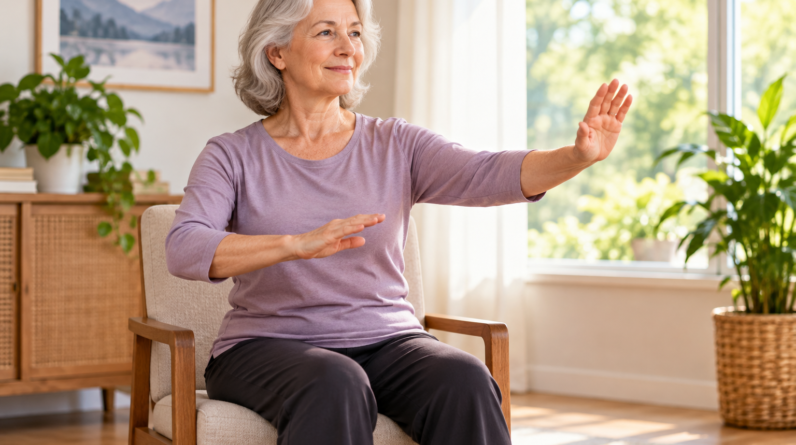
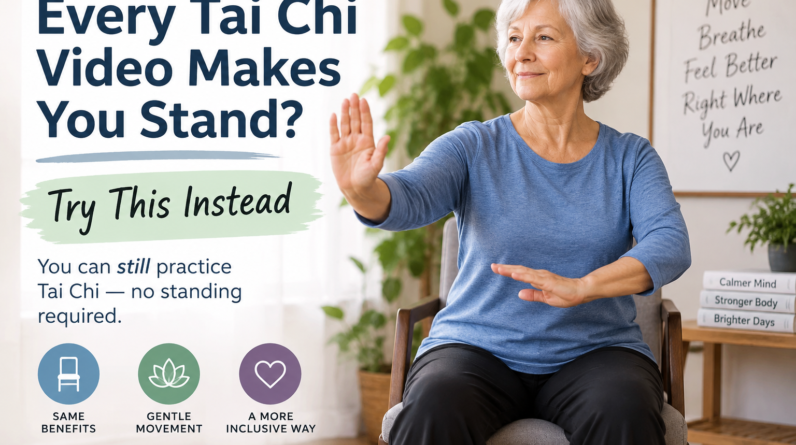
If standing practice is difficult—or if you prefer a gentler approach—you may also enjoy exploring my fully seated Tai Chi and Qigong program designed specifically for accessibility and ease of practice. You can learn more about it here:
https://SeatedChiFlow.com
The program allows people to experience the benefits of slow movement, breath awareness, and mindful flow entirely from a seated position, making it ideal for beginners, seniors, or anyone seeking a calm and sustainable daily practice.
FAQ: Benefits of Slow Movement in Tai Chi
Why is Tai Chi practiced slowly?
Tai Chi movements are performed slowly to improve balance, coordination, and body awareness. Slow motion allows practitioners to maintain proper alignment, synchronize breathing with movement, and develop greater control over the body.
Does slow exercise really work?
Yes. Slow exercise improves neuromuscular coordination, joint stability, and nervous system regulation. Research on Tai Chi shows benefits for balance, fall prevention, stress reduction, and overall well-being.
Is Tai Chi good for beginners?
Tai Chi is particularly well suited for beginners because movements are low impact and adaptable. The slow pace allows new practitioners to learn movements safely and comfortably.
Can Tai Chi reduce stress?
Yes. The slow breathing and controlled movement patterns in Tai Chi activate the parasympathetic nervous system, helping reduce stress and promote relaxation.
Why Slowing Down Changes Everything
In a world that moves faster every year, Tai Chi offers a different message.
Slow down.
Feel the movement.
Let awareness guide the body.
What appears gentle on the outside becomes powerful on the inside.
The paradox of Tai Chi is simple:
By moving slowly, you begin to move better.
And when movement improves, everything else—balance, breathing, clarity, calmness—begins to change with it.