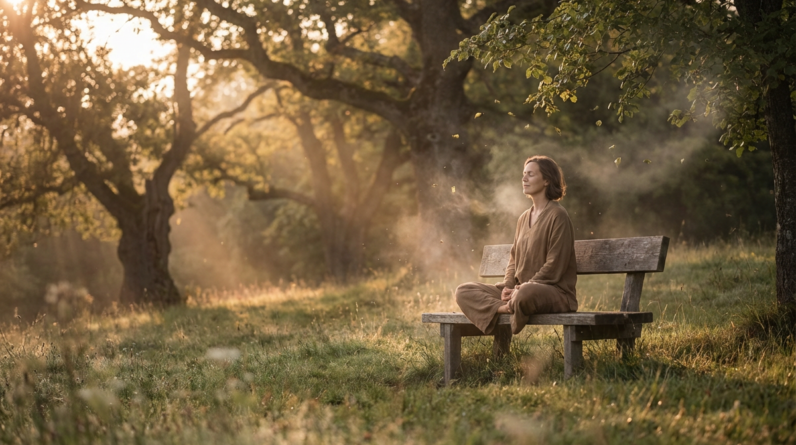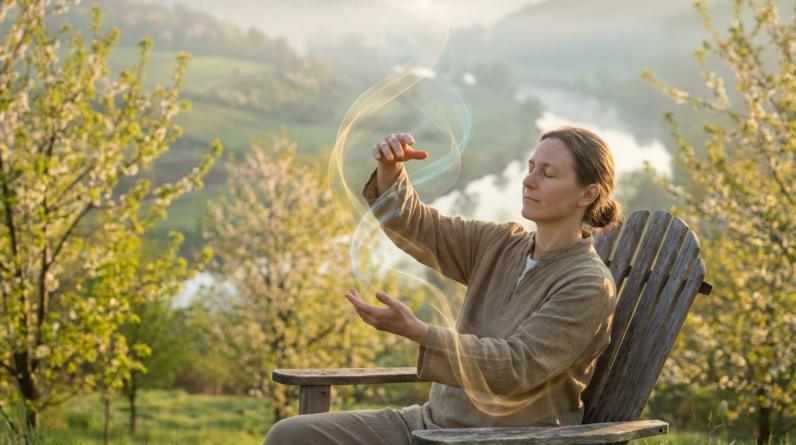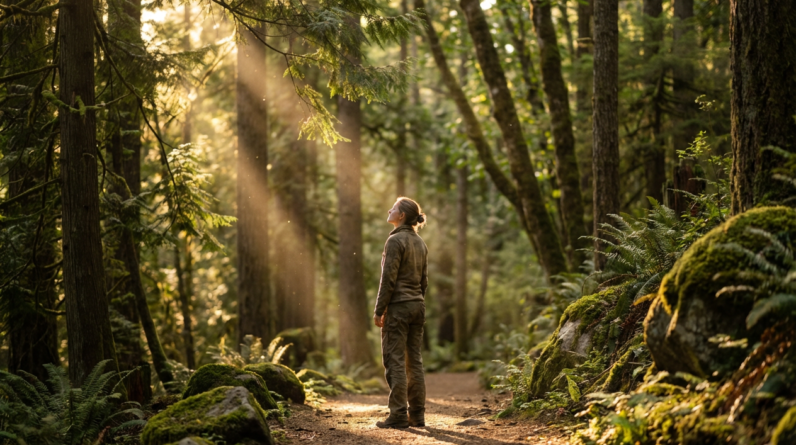
Step outside for a moment.
Notice the air on your skin.
The shifting light.
The subtle movement of trees or clouds.
Almost immediately, something changes inside you.
Your thoughts slow. Your breathing deepens. Your attention settles.
This is not imagination—it’s a well-documented psychological and neurological response. Scientists studying mindfulness, environmental psychology, neuroscience, and human cognition have consistently found that natural environments help the brain return to the present moment.
In other words:
Nature makes mindfulness easier.
Understanding why this happens reveals something powerful about how the human brain works—and how you can use the outdoors as a simple tool to restore calm, clarity, and awareness.
On my Five Element Harmony YouTube channel, I recently asked the question: “When you step outside, what instantly helps you feel more present”? You can check out that video (and add your comment) here.
Why Being Outside Instantly Brings Your Mind Back to the Present
What Mindfulness Actually Means
In psychology, mindfulness refers to a state of present-moment awareness—paying attention to your experience without distraction or judgment.
Key elements of mindfulness include:
- awareness of breathing
- noticing physical sensations
- observing thoughts without reacting
- sensing the environment around you
Modern mindfulness training often requires practice, meditation, and discipline.
Yet something remarkable happens when you step into nature:
Your brain naturally shifts into this state without effort.
Why?
Because natural environments stimulate sensory awareness, which anchors attention in the present moment.
Why Our Minds Drift Indoors
To understand why nature helps mindfulness, we first need to look at the opposite problem.
Most modern environments are designed in ways that fragment attention.
Common contributors include:
- digital screens
- artificial lighting
- constant notifications
- crowded visual environments
- mental multitasking
These conditions activate what neuroscientists call the Default Mode Network (DMN).
The Default Mode Network
The Default Mode Network is a brain system associated with:
- rumination
- self-referential thinking
- daydreaming
- worry about the future
- replaying the past
When this network becomes overactive, people often feel:
- mentally scattered
- anxious
- emotionally overwhelmed
This is one reason so many people report feeling mentally exhausted indoors.
Nature disrupts this pattern.
The Science Behind Why Nature Makes You Mindful
Researchers across multiple fields—including environmental psychology, neuroscience, and cognitive science—have identified several mechanisms explaining why outdoor environments restore attention and presence.
Attention Restoration Theory
One of the most influential explanations comes from psychologists Rachel and Stephen Kaplan, who developed Attention Restoration Theory (ART).
According to this theory:
Human attention operates in two different modes.
Directed Attention
This type of attention is used for:
- work tasks
- reading
- digital focus
- problem solving
Directed attention requires effort and eventually becomes fatigued.
Soft Fascination
Natural environments create what researchers call soft fascination.
Examples include:
- watching leaves move in the wind
- observing water flow
- listening to birds
- noticing clouds drifting across the sky
These stimuli capture attention gently, allowing the brain’s effortful attention systems to recover.
The result:
mental clarity and renewed awareness.
Nature Quieting the Brain’s Default Mode Network
Neuroscience research using brain imaging (fMRI) has shown that time spent in natural environments reduces activity in the Default Mode Network.
This matters because the DMN is strongly associated with:
- rumination
- anxiety
- depression
- overthinking
When the DMN becomes quieter, people experience:
- reduced mental chatter
- improved emotional balance
- heightened awareness of the present moment
This neurological shift is one reason stepping outside can feel like an instant mental reset.
Stress Hormones Drop in Natural Environments
Another powerful mechanism involves cortisol, the body’s primary stress hormone.
Studies consistently show that exposure to nature lowers:
- cortisol levels
- blood pressure
- heart rate
This activates the parasympathetic nervous system, sometimes called the rest-and-digest system.
When this system activates:
- breathing slows
- muscles relax
- attention stabilizes
These physiological changes create ideal conditions for mindfulness.
The Outdoor Presence Effect
Many people describe a distinct shift in awareness when they enter natural environments.
We can think of this phenomenon as the Outdoor Presence Effect.
This effect emerges when three powerful sensory systems activate simultaneously.
Your Senses Wake Up
Natural environments stimulate multiple senses at once:
Vision
Natural landscapes provide depth, motion, and organic shapes.
Sound
Birds, wind, water, and distant environmental sounds create layered auditory signals.
Touch
Temperature, breeze, sunlight, and ground contact add tactile awareness.
These sensory signals anchor attention in the present moment.
Fractal Patterns Calm the Brain
Nature contains repeating visual patterns known as fractals.
Examples include:
- tree branches
- coastlines
- leaf patterns
- clouds
Research suggests these patterns reduce stress and increase cognitive comfort.
Why?
Because the human visual system evolved in natural environments and processes these patterns efficiently and effortlessly.
The 5-Minute Outdoor Mindfulness Reset
You don’t need hours in nature to experience these effects.
A simple 5-minute outdoor practice can dramatically shift your awareness.
Minute 1 — Pause and Breathe
Stand or sit comfortably.
Take slow breaths through your nose.
Feel the air entering and leaving your body.
Breathing awareness is the foundation of mindfulness.
Minute 2 — Expand Your Vision
Instead of focusing on one object, allow your eyes to relax.
Notice:
- peripheral movement
- light changes
- colors and shapes
This widens your awareness.
Minute 3 — Listen to Natural Sounds
Bring attention to sound.
You might notice:
- birds
- wind
- distant traffic
- rustling leaves
Listening deepens present-moment awareness.
Minute 4 — Observe Movement
Movement captures attention naturally.
Watch:
- tree branches
- clouds
- insects
- water
Your mind follows motion effortlessly.
Minute 5 — Let Your Mind Settle
By now your awareness may feel calmer.
Allow your attention to rest in the environment around you.
No effort required.
Just notice.
Why Humans Are Wired to Feel Present in Nature
The powerful psychological effects of nature are not accidental.
They are rooted in human evolution.
The Biophilia Hypothesis
Biologist Edward O. Wilson proposed the Biophilia Hypothesis, which suggests humans possess an innate tendency to connect with natural environments.
For most of human history, survival depended on awareness of nature.
Our brains evolved to respond quickly to:
- landscape patterns
- natural sounds
- environmental changes
These signals still activate deep biological responses today.
Artificial Environments vs Natural Environments
Modern environments differ dramatically from those our brains evolved in.
Indoor spaces often include:
- static visual fields
- repetitive shapes
- artificial light
- limited sensory variation
Nature, by contrast, provides dynamic sensory richness, which stimulates awareness and attention.
The Mental Health Benefits of Outdoor Mindfulness
Regular time in nature supports several aspects of mental wellbeing.
Research links nature exposure to improvements in:
Emotional Balance
Nature reduces anxiety and emotional overload.
Cognitive Clarity
Natural environments improve focus and problem-solving ability.
Creativity
Studies show walking in nature increases creative thinking.
Resilience
People who regularly spend time outdoors show greater stress tolerance.
Simple Ways to Use Nature to Become More Mindful Every Day
You don’t need access to wilderness to benefit from nature.
Even small outdoor moments can help.
Mindful Walking
Walking slowly outside while noticing:
- breathing
- foot movement
- surrounding sounds
This practice is used in many traditions, including Tai Chi and Qigong walking practices, where gentle movement and awareness of the environment help cultivate a calm and centered state of mind.
Nature Breaks During the Day
Short outdoor breaks can reset mental focus.
Even two to five minutes outside can improve attention and restore clarity.
A quick step outside between tasks, meetings, or screen time can help your mind settle and re-center.
Combining Nature With Gentle Movement
Practices such as:
- Tai Chi
- Qigong
- mindful stretching
- breathing exercises
become even more powerful when practiced outdoors.
These movements help integrate body awareness, breath, and environment, creating a natural pathway into mindfulness.
If you enjoy gentle, mindful movement but prefer a practice that can be done comfortably while seated, you might enjoy exploring my fully seated Tai Chi and Qigong program, Seated Chi Flow.
It’s designed especially for people who want to cultivate calm, balance, and flowing energy through simple movements that can be practiced from a chair.
You can learn more about the program here:
https://SeatedChiFlow.com
FAQ: Nature and Mindfulness
Why does nature make you feel calm so quickly?
Nature activates the parasympathetic nervous system, lowers stress hormones, and shifts attention toward sensory awareness, which promotes relaxation and presence.
Can a short walk outside really improve mindfulness?
Yes. Even brief exposure to natural environments can restore attention, reduce mental fatigue, and increase present-moment awareness.
Is sunlight important for mental clarity?
Sunlight helps regulate circadian rhythms and serotonin production, both of which support mood, energy, and cognitive functioning.
The Simple Truth About Presence
Mindfulness is often taught as a difficult skill.
But the truth is simpler.
The human brain is naturally capable of presence.
It simply needs the right environment.
Nature provides that environment.
And sometimes the most powerful mindfulness practice is simply this:
Step outside.
Take a breath.
And notice the world around you.