


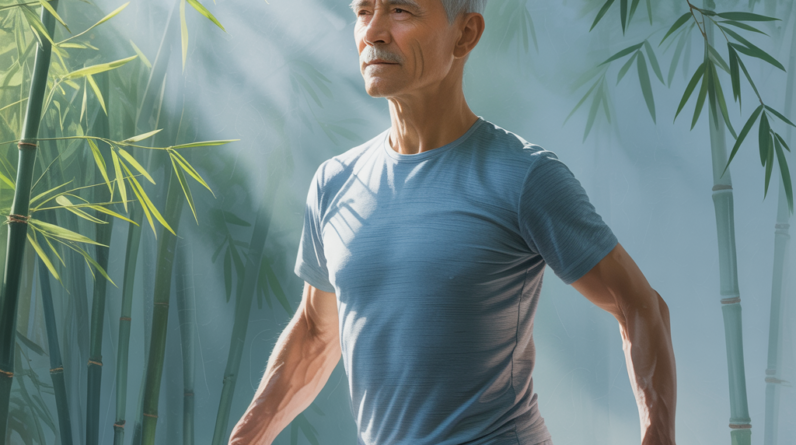
A recent health article described four simple physical abilities that strongly predict longevity:
- Grip strength
- Balance
- Muscle strength
- Coordinated walking ability (especially walking while mentally engaged)
These may seem like ordinary physical skills. But they are actually powerful indicators of the health of your nervous system, muscles, brain, and internal energy.
What’s remarkable is this:
Tai Chi and Qigong directly train every one of these longevity indicators — often simultaneously.
These arts developed over centuries not merely for fitness, but for preserving functional vitality throughout the entire lifespan.
Let’s explore each indicator — and how Tai Chi and Qigong cultivate it.
1. Grip Strength: A Window into Whole-Body Vitality
Modern research shows that grip strength is one of the strongest predictors of longevity. It reflects not only hand strength, but the integrity of the nervous system and muscular coordination throughout the entire body.
In Tai Chi, the hands are never isolated. They are connected to the legs through the waist and spine. This whole-body integration naturally develops functional strength.
One excellent training method is:
Tai Chi Walking while holding light dumbbells

Holding light weights while practicing Tai Chi walking:
-
develops grip strength
-
strengthens the connective chains from hand to foot
-
enhances structural integrity
-
increases awareness of internal alignment
Unlike isolated strength exercises, this builds strength that is coordinated, functional, and integrated.
2. Balance: A Predictor of Neurological and Physical Resilience
Balance is one of the clearest indicators of longevity. It reflects coordination between the brain, nervous system, muscles, and inner ear.
Tai Chi and Qigong contain numerous exercises specifically designed to refine balance.
Two particularly valuable practices are:
Golden Rooster Stands on One Leg (Tai Chi)
and
Seven Steps to New Life (Qigong)
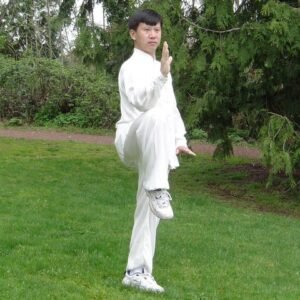
These exercises train:
-
single-leg stability
-
nervous system precision
-
postural integrity
-
confidence in movement
They also calm the mind, which further enhances balance by reducing internal tension and over-correction.
Balance is not merely physical — it is neurological.
Tai Chi and Qigong train both.
3. Leg Strength: The Foundation of Longevity
Leg strength is essential for mobility, independence, and long-term health.
In Tai Chi, strength is developed through slow, controlled weight shifts rather than brute force.
One excellent example is the Raised Hands Stance.

This posture develops:
-
deep leg strength
-
structural alignment
-
connective tissue resilience
-
endurance without strain
Because the movement is slow and controlled, muscles develop strength in harmony with the nervous system.
This is strength that supports longevity, not injury.
4. Coordinated Walking: Integrating Brain and Body
Researchers now recognize that walking ability — especially coordinated, attentive walking — is a powerful predictor of longevity.
Tai Chi begins with walking.
Tai Chi walking forms the foundation for movements such as:
Brush Knee and Push
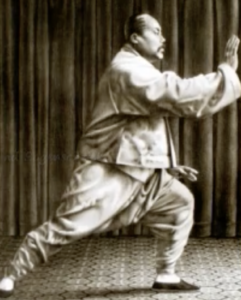
Tai Chi walking trains:
-
coordination
-
weight transfer
-
nervous system integration
-
spatial awareness
-
mental focus
Each step is intentional, controlled, and integrated with breath and awareness.
This strengthens the communication between brain and body — one of the keys to healthy aging.
Why Tai Chi and Qigong Are Uniquely Powerful for Longevity
Most exercise systems isolate physical qualities.
Tai Chi and Qigong integrate them.
In a single practice session, you develop:
-
grip strength
-
balance
-
leg strength
-
coordination
-
nervous system regulation
-
mental calm
-
internal energy flow
This integrated training supports the entire organism.
From a Five Element perspective, these practices nourish the Kidney system — the foundation of vitality and longevity — while harmonizing all other organ systems.
The Deeper Truth: Longevity Is About Functional Harmony
Longevity is not defined merely by chronological age.
It is defined by functional vitality.
Tai Chi and Qigong preserve the qualities that matter most:
-
stability
-
coordination
-
strength
-
calm
-
awareness
-
adaptability
These qualities allow us not merely to live longer — but to live better.
A Personal Note
One of the reasons I have devoted so much of my life to Tai Chi and Qigong is that I have seen, again and again, how these practices preserve the very capacities that allow us to remain independent, confident, and fully alive.
Over the years, I have watched students improve their balance, regain strength, and move with greater ease and assurance. But perhaps even more importantly, I have seen something deeper emerge — a renewed sense of trust in their own bodies.
In the Five Element tradition, longevity is not viewed as something we chase. It is something we cultivate through daily harmony between movement, breath, and awareness.
The encouraging news is that it is never too early — and never too late — to begin.
Each slow, mindful step helps strengthen the nervous system. Each moment of balanced stillness refines coordination. Each gentle posture builds strength that supports you in every aspect of life.
Longevity is not built through intensity. It is built through consistency.
And it begins with a single step.
If you would like guidance, I share gentle, accessible practices through my Seated Chi Flow™ program, designed especially for those who wish to cultivate strength, balance, and internal vitality in a safe and supportive way. Whether practiced seated or standing, these movements help develop the very qualities now recognized as essential to healthy aging.
— Ralph Lorenz, PhD
Five Element Harmony
Reference
This article was inspired by recent health reporting highlighting four key physical indicators of longevity, including grip strength, balance, strength, and coordinated walking ability.
(Source: “Are You Aging Faster Than You Think?” A similar test substituted a sitting-rising task among the 4 markers.)



1 Comment
Comments are closed.